
Heraclitus said it best over two thousand years ago: the only constant in life is change. And if the opening months of 2026 have taught us anything, it's that hotel revenue management is no exception.
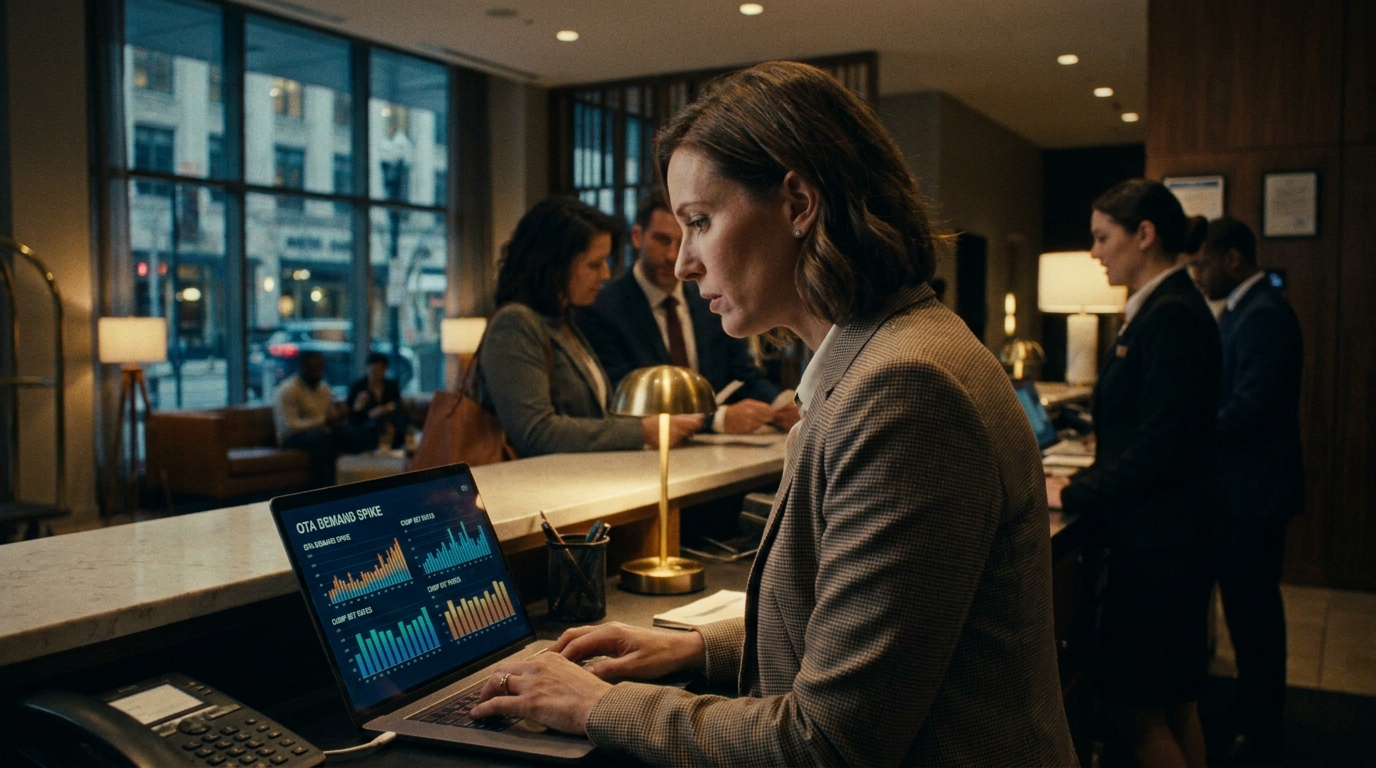
Volatility is back, and it's not going anywhere soon. Macroeconomic noise, shifting traveler behavior, and unpredictable demand patterns are making this one of the more challenging pricing environments in recent memory. If your strategy right now is to set rates and hope for the best, you're leaving money on the table — or worse, hemorrhaging it.
So let's talk about how to actually protect and grow revenue when the market refuses to cooperate.
1. Stop Trying to Predict. Start Preparing Instead.
Nobody knows exactly what 2026 holds. The smarter move is to plan for a range of outcomes — a strong demand rebound, a soft patch, or something in between — and decide in advance how you'll respond to each.
Accept what's outside your control: geopolitics, economic sentiment, the next travel disruption nobody saw coming. Then double down on what is within your control: how you price, how you manage inventory, and how fast you move when conditions shift.
Speed beats perfection in a volatile market. Always.
2. Watch How Bookings Are Moving, Not Just Where They Land
Occupancy is a lagging indicator. By the time it tells you something's wrong, you've already lost the window to act.
What you want to watch is pace — how fast rooms are being booked for a given date, not just how many have been booked. Two properties sitting at 50% occupancy can be in completely different situations depending on whether that pace is accelerating or stalling.
Track these signals closely:
Rooms already on the books vs. historical benchmarks. Booking velocity day over day. Cancellation and date-change rates. Shopping-to-booking conversion trends.
When pace picks up, push rates. When it stalls, you still have time to course-correct — but only if you're watching.
3. Panic Discounting Is a Trap
When demand dips, the gut reaction is to slash rates. Resist it.
Blanket discounts erode perceived value, train guests to wait for deals, crush profitability, and make it brutally difficult to recover rate integrity afterward. The damage outlasts the slowdown.
The smarter play is surgical discounting. Instead of lowering rates for everyone, target specific behaviors you want to stimulate:
Early bookers. Last-minute fills. Non-refundable stays. Extended stays. Specific segments like corporate or group. Direct bookings over OTA.
You protect your average rate while still creating pathways for price-sensitive travelers. That's the difference between strategy and panic.
4. Treat Your Inventory Like the Finite Asset It Is
Rooms are perishable. Tonight's unsold room is gone forever by tomorrow morning. That reality demands boldness when demand surges and discipline when it softens.
Inventory controls are your second lever beyond pricing. Use them:
Minimum length-of-stay restrictions during high-demand windows. Tighter cancellation policies when you have pricing power. Stop giving away upgrades on your premium rooms. Close off third-party channels when you want to drive direct.
Filling rooms isn't the goal. Filling them with the right business, at the right price, at the right time — that's the goal.
5. Know Your Competitors. Don't Be Controlled by Them.
Competitive rate intelligence matters. But matching the hotel down the street dollar for dollar is not a strategy — it's a reflex.
Your competitors have different cost structures, different occupancy positions, and different objectives. Following them blindly during volatile periods can leave you mispriced in either direction.
Use competitor data as one input, not the whole picture. Layer in your own booking pace, your property's demand signals, and where you sit relative to the broader market before making a move.
Optimize for your performance. Not theirs.
6. Automate the Watch So You Can Run the Business
None of what's described above is sustainable if a human has to manually monitor it all day, every day. Markets move too fast and the data is too noisy.
Pricing automation exists to solve exactly this problem. It reacts to demand shifts in real time, removes emotion from rate decisions, and keeps your pricing calibrated to market conditions around the clock.
The best revenue leaders use automation not as a replacement for strategy, but as the engine that executes it — so they can stay focused on the bigger picture rather than firefighting every market movement.
The Market Changes. The Fundamentals Don't.
Volatility comes and goes. What separates the properties that thrive through it from the ones that merely survive is preparation, discipline, and the willingness to move decisively on data rather than instinct.
The anxious hotelier reacts. The strategic one is already three steps ahead.
Which one are you building toward?
RevParGenius | Smarter Revenue. Every Night.