You became a hotelier to create experiences. To run a property you are proud of. To connect with guests and build something that lasts.
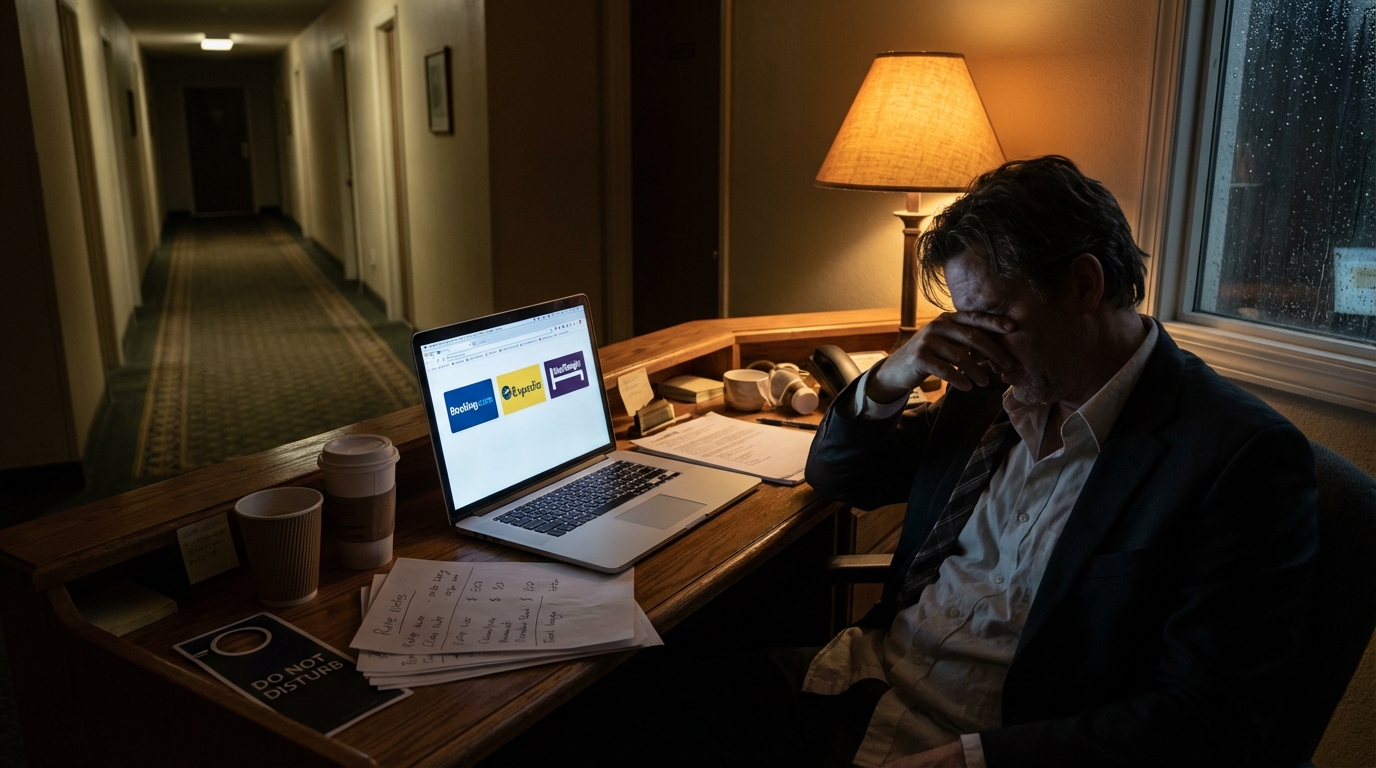
You did not become a hotelier to spend your evenings staring at competitor rates on Booking.com, updating spreadsheets, and logging into three different systems just to move a price by five dollars.
And yet here you are.
If this sounds familiar, you are not alone — and you are not failing at revenue management. You are simply being asked to do something that is structurally impossible for a one-person or small-team operation to execute at the speed the market now demands. RevParGenius broke down exactly what manual pricing really costs, and the numbers are worth understanding before you spend another evening on it.
The Real Cost of One Pricing Decision
Most independent hoteliers think of a rate update as a quick task. Log in, change the number, done. But that is not what actually happens when you do it properly. A single high-quality pricing decision — the kind that actually moves your revenue in the right direction — breaks down like this:
Data collection — 10 minutes Checking competitor rates across OTAs for a specific stay date, reviewing your own occupancy and pickup trends.
Analysis — 4 minutes Processing what you found, weighing demand signals, deciding on the right move with the information available.
Execution — 2 minutes Logging into your channel manager or PMS, pushing the update live across all booking channels.
Total time per pricing decision: 16 minutes. That is before interruptions, before the system logs you out, and before you realise you forgot to update one of your OTA channels.
Now multiply that by reality.
The Gap Between What You Can Do and What the Market Demands
Most independent hoteliers manage to update rates around 12 times per day when they are being diligent. At 16 minutes each, that is already over three hours of pure pricing work — before you have answered a single guest email, handled a check-in, or dealt with anything else that runs a hotel.
Updates hoteliers manage daily: 12 — equal to 3+ hours of pricing work
Updates the market actually demands: 35 — based on real-time signals
Time required at full market pace: 10 hours — every single day
Here is the uncomfortable truth. To actually keep pace with how fast the market moves — accounting for competitor rate changes, demand shifts, event announcements, weather-driven last-minute bookings, and OTA ranking fluctuations — you would need to make around 35 pricing updates per day based on live market data.
At 16 minutes each, that is 560 minutes. Just under 10 hours. Every single day.
That is not a time management problem. That is a structural impossibility. No independent hotelier running a property with a small team can execute 35 data-driven pricing decisions per day on top of everything else the job demands. The market has simply moved faster than manual processes can follow.
Why the Market Moves Faster Than You Can React
The pricing environment independent hotels compete in today looks nothing like it did five years ago. The dynamics that are making manual pricing increasingly untenable are not slowing down.
Competitors Are Updating Rates Multiple Times Per Day
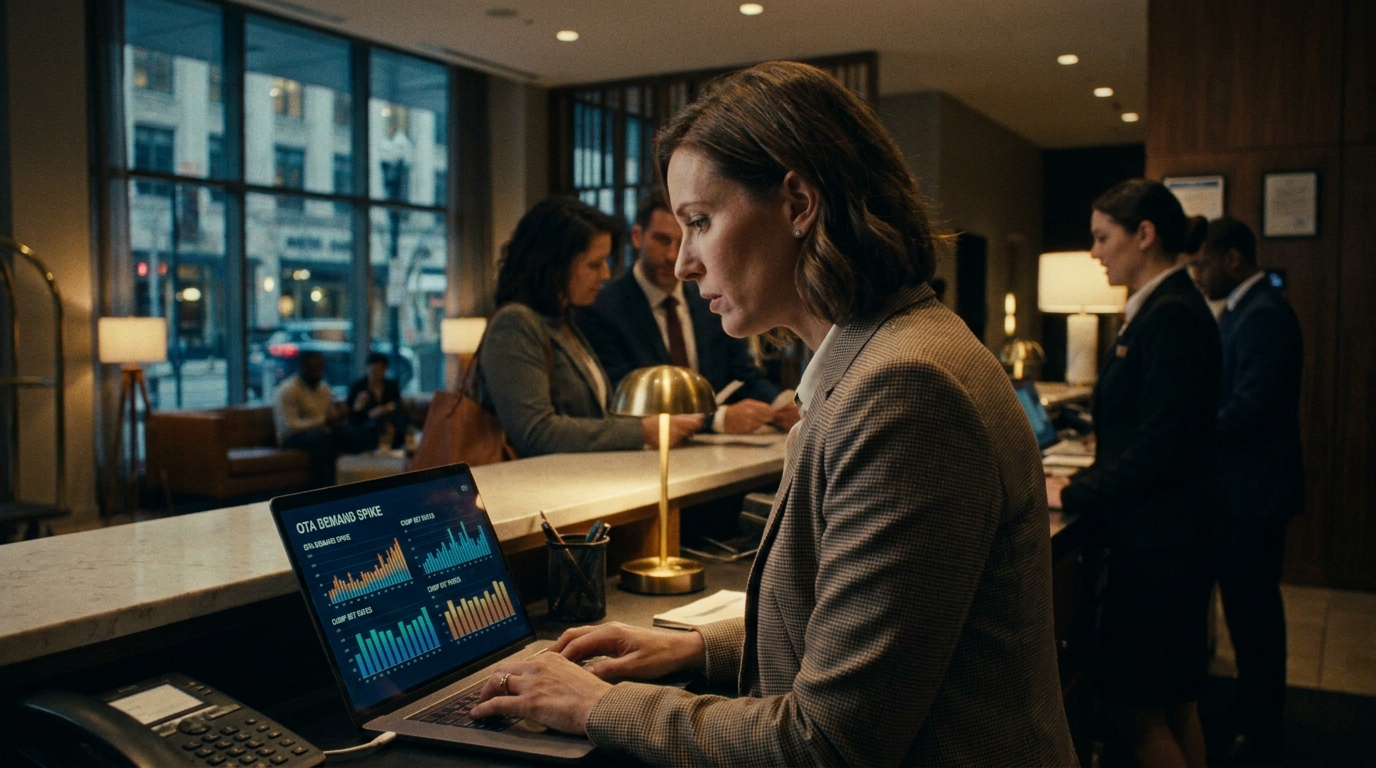
The larger properties in your competitive set — and increasingly, the well-managed independent hotels too — are running automated pricing systems that respond to demand signals in real time. While you are checking their rate on Booking.com at 9pm, their system has already updated three times since you last looked. By the time your new price is live, their system has moved again.
Demand Shifts Happen Without Warning
A local event gets announced. A flight route opens. A major employer in your city announces a conference. These signals move market demand within hours and the window to capture the resulting premium closes fast. Manual monitoring simply cannot catch and respond to these signals at the speed they require.
You Are Always Working With Yesterday's Data
This is the most painful part of manual pricing — and the most expensive. By the time you have collected competitor data, analysed it, and pushed an update live, the market has moved. You are not responding to current conditions. You are responding to conditions that existed 16 minutes ago, or an hour ago, or yesterday morning. The biggest opportunities pass in the window between when the signal appears and when you act on it.
The RevParGenius read: Independent hoteliers are not losing revenue because they are making bad pricing decisions. They are losing revenue because they physically cannot make enough good pricing decisions fast enough to keep pace with a market that never stops moving.
What Three Hours of Daily Pricing Work Is Actually Costing You
If you are among the hoteliers managing 12 manual updates per day, you are already spending over three hours on pricing alone. That time has a cost that goes beyond the hours themselves.
The Opportunity Cost of Your Attention
Three hours spent on manual pricing is three hours not spent on the things that actually differentiate your property — guest experience, direct relationship building, property improvements, staff development. These are the investments that drive repeat bookings, direct channel growth, and word-of-mouth referrals. Manual pricing does not just cost time. It costs the compounding returns of everything you could have done instead.
The Revenue Cost of Imperfect Timing
Every rate update you make manually is based on data that is already partially outdated. Every hour your rates sit unchanged while market conditions shift is an hour of misaligned pricing. Across 365 days, the cumulative revenue impact of rates that are perpetually slightly wrong — either too high losing bookings, or too low leaving margin on the table — is significant for any independent property.
The Psychological Cost of Never Being Sure
This one rarely gets talked about. Independent hoteliers who manage pricing manually describe a persistent low-level anxiety about whether their prices are right. Did I overprice this weekend? Am I too cheap for next month? Should I have moved sooner? That mental load does not clock off when you stop updating rates. It follows you into the rest of your workday and, often, into your evenings.
What Changes When Pricing Runs Automatically
The shift that automated dynamic pricing creates for independent hoteliers is not incremental. It is categorical. The work does not get faster — it gets done by a system that never sleeps, never has a busy check-in afternoon, and never acts on outdated information.
A well-configured automated pricing system does what you would do if you had 10 hours every day to dedicate exclusively to revenue management — except it does it in real time, across every future date, simultaneously, without the cognitive overhead of manual decision-making.
What that looks like in practice: No more opening competitor tabs every evening. No more spreadsheet calculations before bed. No more logging into multiple extranets to push an update. No more lying awake wondering if you priced next Saturday correctly. Your rates are moving when the market moves — not when you find the time to catch up with it.
The reclaimed time is real and it is significant. But the more important shift is what happens to your revenue when pricing decisions are made on live data rather than whatever snapshot of the market you managed to capture between your other responsibilities.
The Honest Question Every Independent Hotelier Should Ask
If someone told you there was a part of your operation that requires 10 hours of skilled daily attention to run at full effectiveness, and you are currently giving it three — or less — what would you do about it?
Most independent hoteliers already know their pricing could be better. They feel the gap between what they are doing and what the market demands. The missing piece is not knowledge or effort. It is the structural capacity to act on pricing signals at the speed and frequency the market now rewards.
Manual pricing is not a personal failing. It is a system that was designed for a slower market operating at a speed that no longer exists. The question is not whether to change it — the question is how long you can afford to keep doing it the way you are doing it now.
The Bottom Line
One manual rate update takes 16 minutes. The market demands 35 per day. That is 10 hours of revenue management work that independent hoteliers either sacrifice their evenings to attempt — or leave undone while competitors capture the revenue gap.
Automation does not just save time. It closes a gap that manual processes were never built to fill. The hoteliers who understand this earliest are the ones whose revenue reflects it most clearly — not because they worked harder, but because they stopped fighting a structural impossibility and built a system that works while they sleep.
RevParGenius Market Intelligence | Independent Hotel Revenue Management Series Live data. No guesswork. Just signal.