Intelligence Series · April 2026 · RevParGenius · OTA + Event Methodology
Not every strong Saturday is an event-compression weekend. Not every event produces compression. The difference matters enormously — because the pricing response to genuine event compression is materially different to the response for a normally strong weekend. Gold Coast's May 2026 data gives us a clean side-by-side comparison of both.
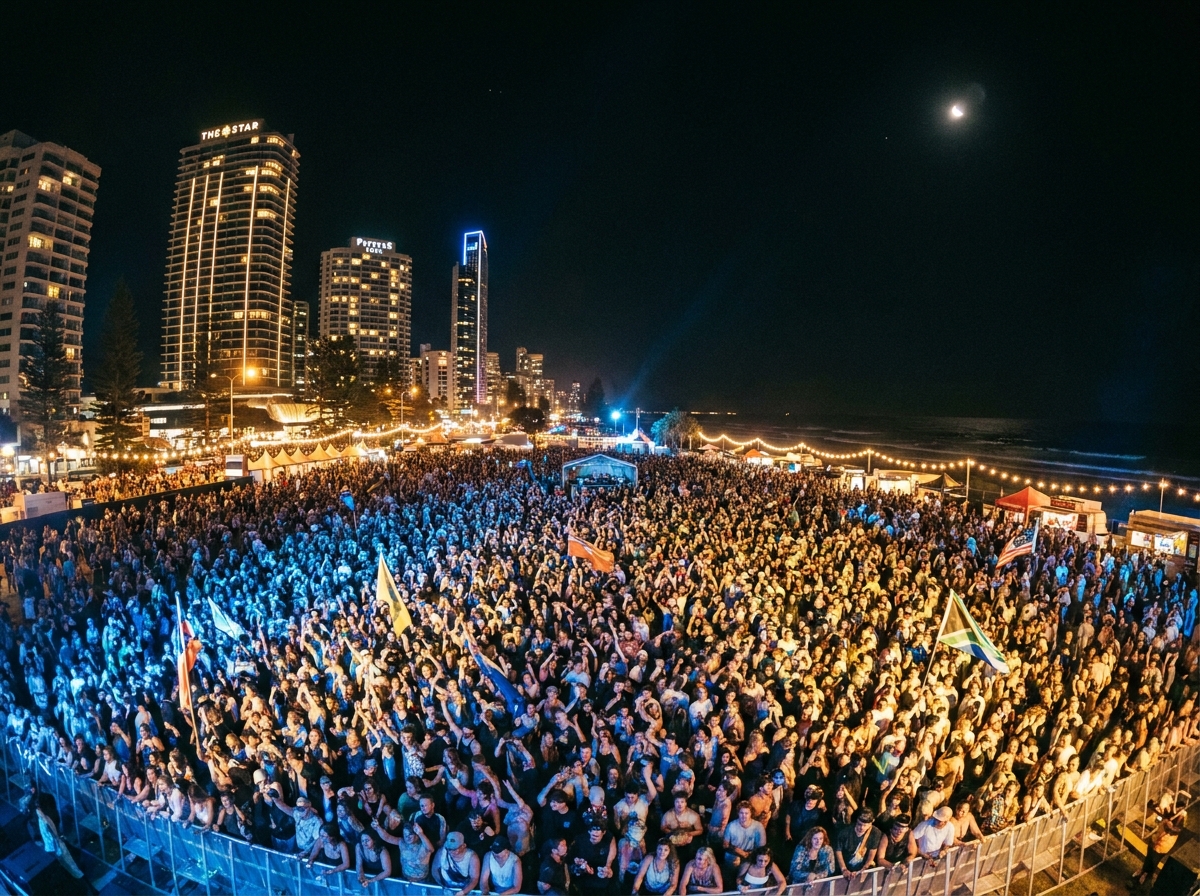
Blues on Broadbeach (14–18 May) produced +79.8% weekend uplift — A$137 weekday, A$246 Saturday, a A$109 gap. Fisher (3 May) coincided with the opening weekend's +54% uplift — A$119 weekday, A$184 Saturday, a A$64 gap. Both are strong weekends. But they are not the same kind of strong — and the pricing strategy for each is meaningfully different.
Event vs Normal Strong Saturday — AUD Comparison
What Genuine Event Compression Looks Like
Blues on Broadbeach is a five-day destination festival. The demand profile it creates has three characteristics that distinguish it from a normal strong weekend: advance booking (visitors plan trips, not last-minute breaks), multi-night stays (the festival runs Wednesday through Sunday, so the accommodation window extends beyond just Saturday), and reduced price sensitivity (destination festival visitors have already committed to travel costs and are less likely to comparison-shop on accommodation rate).
In the OTA data, this shows up as a wider ADR range at the top end — the cleaned Saturday sample ran from A$204 to A$499, with the upper tier clearing well above normal Saturday levels. That spread reflects the market segmenting: destination visitors filling premium inventory at high rates, while lower-tier inventory fills at more normal pricing. The volatility reading from the scan was normal-to-elevated — consistent with a market where some hotels have already moved hard on rate and others have not yet caught up.
1. Uplift that is materially above your normal Saturday premium — not 10–15% above weekday, but 50–80%+. 2. ADR spread widening at the top — premium inventory clearing well above its usual ceiling. 3. Demand that extends beyond the Saturday anchor — midweek check-ins, multi-night stays, advance booking patterns visible in pickup data.
How a Concert-Adjacent Strong Saturday Differs
The 2 May opening weekend — influenced by Fisher on 3 May — produced +54% uplift. That is real compression and should absolutely be priced accordingly. But the demand profile is different. A concert event typically generates one-night accommodation demand concentrated on the night of the show. The guests are coming to the Gold Coast for the concert, not for a multi-day destination stay. That means the Monday check-out and multi-night stay dynamics of the Blues on Broadbeach window do not apply.
The practical pricing difference: for the 2 May weekend, push Saturday rate hard but be cautious about MinLOS restrictions — a 2-night minimum may cause you to turn away legitimate single-night bookings from guests who are only staying for the concert. For the 16 May Blues on Broadbeach window, a minimum stay is entirely appropriate and commercially correct because the demand genuinely extends across multiple nights.
RevParGenius Take
Event compression and a normal strong Saturday both show up as high uplift in the data. The difference is in the demand profile — and the demand profile determines which pricing levers are appropriate.
For genuine multi-day festival compression like Blues on Broadbeach: push rate across the full window, apply MinLOS, tighten cancellation, and push premium room supplements. For concert-adjacent single-night compression like 2 May: push Saturday rate hard, but keep restrictions proportionate to a one-night demand profile. Both are opportunities. Neither should be treated identically.
Free Hotel Market Intelligence
Get Event-Overlaid Demand Analysis for Your Market
RevParGenius overlays live event data on top of OTA and STR scans so you can see which weekends are event-driven and which are organic. Request a free analysis for your market.
Request Your Free Market AnalysisView All APAC Market Reports
No commitment. Just live data at revpargenius.com
Data sources: Live OTA pricing scans in AUD (sub-A$50 listings excluded), verified events calendar, AirDNA STR data (partial, Gold Coast market ID 84871). Analysis run April 2026. RevParGenius is an independent hotel market intelligence platform — not affiliated with any OTA, revenue management system, or hotel chain.