Hotelier Guide · May 2026 · RevParGenius Intelligence · Last reviewed May 2026
To get your hotel recommended by ChatGPT and other AI assistants in 2026, you need three things in order: a crawlable, indexable, server-rendered website; answer-formatted content with self-contained answers, dated statistics and cited sources; and structured data (Hotel, FAQPage, Speakable) that tells machines exactly what you are. ChatGPT reads Bing's index, so allow the GPTBot and OAI-SearchBot crawlers. Skip llms.txt and AI-specific rewrites — Google says it ignores them. Distinctive, genuinely useful content is what earns the citation.
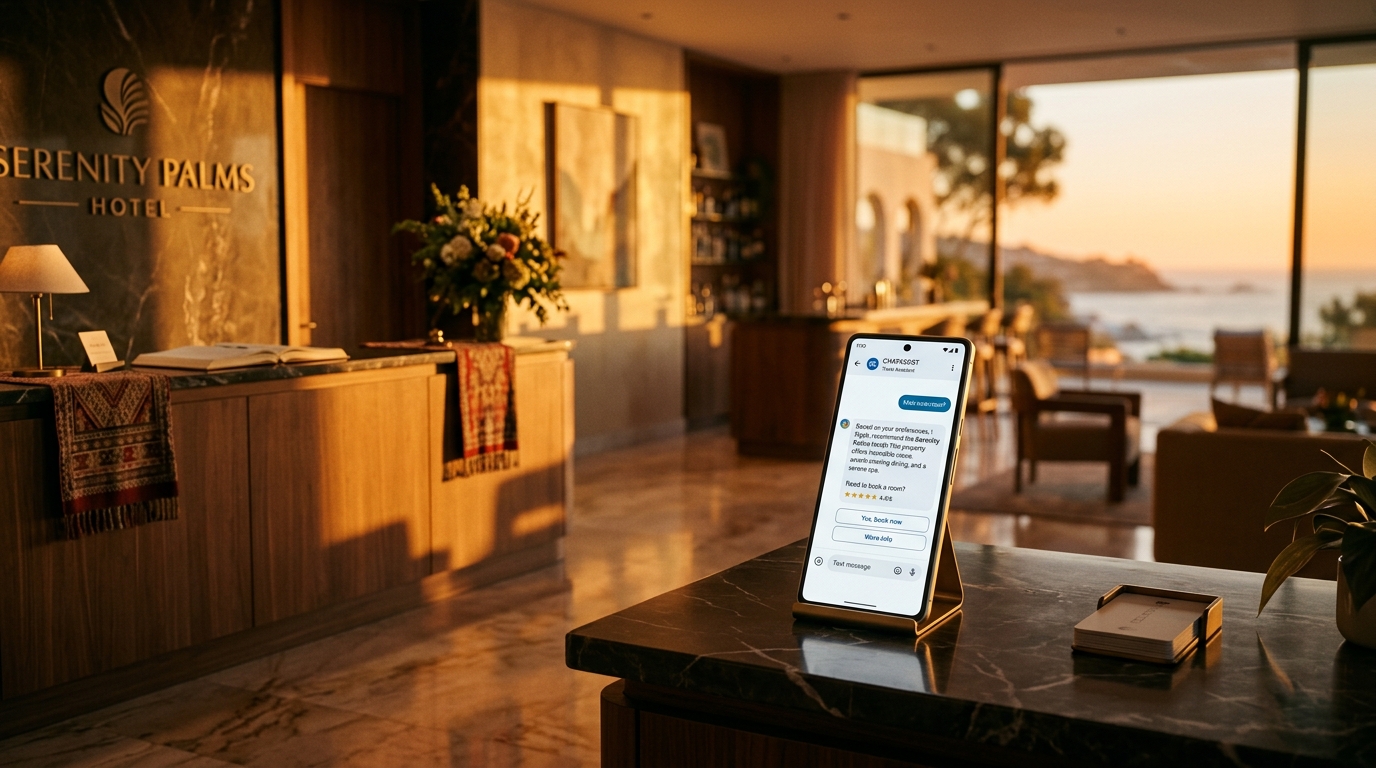
More than half of travellers now ask an AI assistant before they ask a booking site. If ChatGPT, Gemini, Perplexity or Claude can't see your hotel, you are invisible at the exact moment the decision is being made — and no amount of ad spend fixes that.
Getting your hotel recommended by AI comes down to three things, in order: a technical floor that lets AI crawlers index you, content written so an assistant can lift a clean answer, and structured data that tells the machine exactly what you are. This guide walks through each — and the tactics Google has publicly told hoteliers to stop wasting time on.
Why this matters now
How AI assistants actually pick which hotels to name
Each assistant retrieves from a different source, so "AI visibility" is really four problems. ChatGPT Search reads the Bing index and uses three crawlers (GPTBot, OAI-SearchBot, ChatGPT-User). Google's AI Overviews and AI Mode draw from Google's own index. Perplexity crawls in real time and weights freshness heavily. Claude retrieves through Brave Search. Being recommended means being in the index each one reads — and being the clearest answer once you're there.
The practical consequence: there is no single "AI SEO" switch. If Bing can't index your site, you vanish from ChatGPT. If your canonical or headers block Google, you never reach an AI Overview. The work is unglamorous and technical first, creative second.
Check your robots.txt explicitly allows GPTBot and OAI-SearchBot (ChatGPT), Google-Extended (Gemini), PerplexityBot, and ClaudeBot. Blocking OAI-SearchBot removes you from ChatGPT Search answers entirely — even if your meta robots say "index, follow".
Step 1: The technical floor — no floor, no citation
Before any clever content work, your pages must be crawlable and indexable. That means server-rendered HTML (an AI crawler that sees an empty page renders nothing), a correct self-referencing canonical on every page, no soft 404s, and response headers that don't quietly block indexing. This is the single most common reason good hotel content never appears in AI answers.
If your site is a JavaScript single-page app that loads content after the page mounts, assume both Google and Bing see a blank shell. Render the content in the server HTML before the page hydrates. It is the difference between being readable and being invisible.
Step 2: Write content an assistant can lift
AI assistants quote self-contained answers, not whole pages. A 2024 Princeton and IIT Delhi study (Aggarwal et al., presented at KDD 2024) tested 10,000 queries and found the content tactics that measurably increase AI citation: named expert quotes lifted citation by 41%, named and dated statistics by 31%, self-contained 60–90 word answer blocks by 28%, and inline source citations by 27%.
For a hotel, that means leading each page with a short, direct answer ("The Harbour View is a 4-star boutique hotel in central Hobart, two minutes from Salamanca Market, with rates from A$220 in winter"), backing claims with dated specifics, and answering the real questions guests ask in plain language rather than marketing copy.
Named expert quotes +41% · named/dated statistics +31% · self-contained answer blocks +28% · inline cited sources +27%. Keyword stuffing produced a negative result.
Step 3: Structured data that makes you legible
Schema markup won't rank you on its own, but it tells machines exactly what you are. For a hotel, add Hotel or LodgingBusiness schema (name, address, geo-coordinates, star rating, price range), FAQPage schema for your guest-question content, and Speakable to mark the passages built for voice and AI extraction. This is what lets an assistant state your address, price band and location with confidence instead of guessing.
Keep one consistent name, address and phone number everywhere — site, Google Business Profile, directories. Inconsistent details are one of the fastest ways to lose an AI's confidence in your property.
What Google has told hoteliers to ignore
Google's own 2026 guidance is explicit about what does not move the needle: an llms.txt file (Google does not use it), chunking content specifically for AI, rewriting pages just for machines, and chasing inauthentic mentions. Schema is worth having for rich-result eligibility, but it is not a standalone AI-ranking lever.
What Google says actually matters is the opposite of gaming: unique, non-commodity content with a genuine point of view, a sound technical foundation, and pages that satisfy a real human reader. A hotel with a distinct voice, local knowledge and honest specifics beats a page engineered for an algorithm.
Your AI-visibility checklist
Confirm your pages are server-rendered and indexable — test the live URL in Google Search Console and Bing Webmaster Tools.
Allow the AI crawlers in robots.txt: GPTBot, OAI-SearchBot, Google-Extended, PerplexityBot, ClaudeBot.
Lead every page with a 60–90 word self-contained answer, and back claims with dated specifics.
Add Hotel, FAQPage and Speakable schema, and keep your name, address and phone identical everywhere.
Skip the llms.txt and AI-specific rewrites — invest the time in genuinely useful, distinctive content instead.
RevParGenius Take
Getting recommended by AI is not a trick — it is SEO discipline plus answer-shaped writing. Fix the technical floor first, then make every page the clearest answer to a real guest question.
The hotels winning AI recommendations in 2026 are not the ones gaming schema or stuffing keywords. They are indexable, specific, and genuinely useful — and they show up because there is something real for the machine to quote.
Frequently asked questions
How do I get my hotel mentioned by ChatGPT?
ChatGPT Search reads the Bing index, so first make sure your site is indexed in Bing and that you allow the GPTBot and OAI-SearchBot crawlers in robots.txt. Then publish clear, answer-formatted pages with specific, dated facts about your property. ChatGPT can only recommend what Bing has indexed and can cleanly quote.
Does schema markup help my hotel show up in AI search?
Schema helps machines understand what your property is and supports rich-result eligibility, but Google's 2026 guidance is clear it is not a standalone AI-ranking signal. Use Hotel, FAQPage and Speakable schema as a foundation, then rely on genuinely useful content to earn the citation.
Do I need an llms.txt file?
No. Google has stated it does not use llms.txt. Your effort is far better spent on a crawlable, server-rendered site and distinctive, answer-formatted content than on files the major engines ignore.
Why does my hotel appear in Google but not in ChatGPT?
Because they use different indexes. Google AI features read Google's index; ChatGPT reads Bing's. A page indexed in Google can be entirely absent from Bing — check Bing Webmaster Tools separately and request indexing there.
Free AI-Visibility Check
Is your hotel visible where guests now ask?
We'll check whether your property is indexable, AI-readable, and built to be cited — then show you exactly what to fix.
Get Your Free AI-Visibility CheckSee Our Website Design Service
No commitment. Just live data at revpargenius.com
Sources: Princeton/IIT Delhi GEO study (Aggarwal et al., KDD 2024); US AI travel-planning adoption data (2026 industry surveys); Google Search Central AI-features guidance (2026); Google AI Mode hotel features (2026). Last reviewed May 2026. RevParGenius is an independent hotel market intelligence platform — not affiliated with any OTA, revenue management system, or hotel chain.