-->
Hotel Pricing Strategy · RevParGenius Intelligence · Hotel Revenue Management 2026
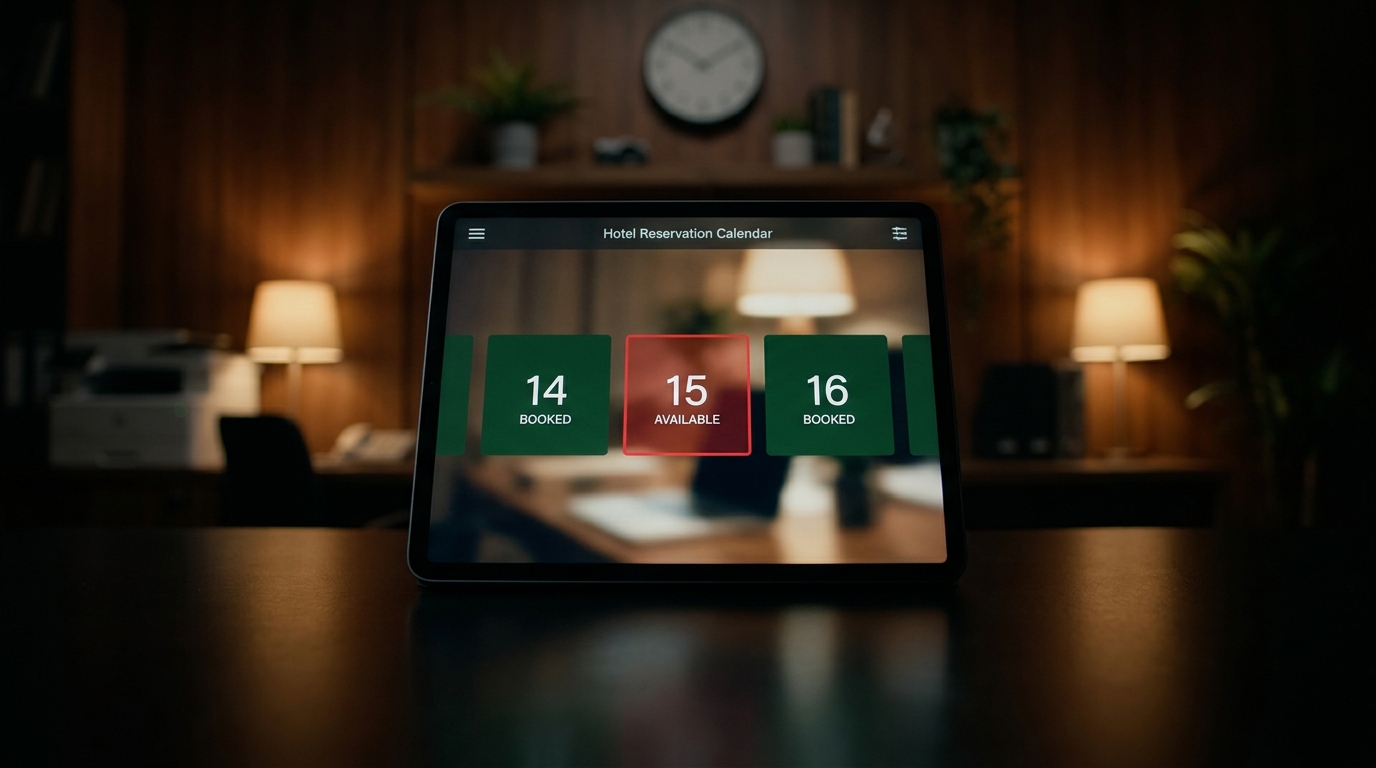
Orphan dates are silent. They do not trigger alerts. They do not show up in RevPAR reports as a separate line item. They accumulate across a month and a year as a collection of unrecoverable room nights that were available but structurally un-sellable — and for most independent hotels, they represent between 3% and 7% of total potential room nights annually.
What an Orphan Date Looks Like on a Calendar
Why Orphan Dates Form
Orphan dates are typically a side effect of minimum stay restrictions. A hotel that applies a 2-night minimum on weekends may find that a guest checking out on Saturday and another checking in on Sunday has left Friday as an isolated single night that cannot be sold under the 2-night rule. The night is available, demand may exist, but the structural restriction prevents a booking from forming.
They also form naturally from booking patterns — a guest who books Wednesday through Saturday checkout and another who books Sunday through Tuesday checkout leaves Saturday as a single night gap. No minimum stay restriction is required; the booking pattern itself creates the orphan.
Three Ways to Recover Orphan Revenue
Cascading Minimum Stay Override
Advanced pricing systems automatically detect when a single night remains between two bookings and override the minimum stay restriction specifically for that date, making it bookable at a single-night rate. The override applies only to the orphan — the surrounding dates retain their restrictions.
Gap Discount
Apply an automatic 15–20% discount to any orphan gap of one or two nights to increase its attractiveness to last-minute travelers. The discounted rate on one recovered orphan night produces more revenue than the zero revenue from an unsold one.
Adjacent-Day Rate Incentive
Lower the rate on the nights immediately before or after an existing booking to encourage guests to extend their stay into the gap. A guest already booked Wednesday through Friday may extend to Saturday if the Saturday rate is presented as a step-down rather than a premium.
RevParGenius Take
Orphan dates are invisible to a standard calendar view but visible to any system that looks at booking patterns rather than just occupancy totals. Finding them is the first step. Having a recovery rule in place before they form is the second.
For a 20-room hotel running 75% average occupancy, recovering even half of the orphan nights through gap discounts or MinLOS overrides can represent 50 to 100 additional room nights per year. At an average discounted rate of A$150, that is A$7,500 to A$15,000 in recovered revenue that was previously showing up as zero on the calendar.
Automated Dynamic Pricing — Try Free for 14 Days
Stop Leaving Orphan Nights Unsold.
RoomPriceGenie automatically detects and manages orphan date gaps, applying recovery logic across all distribution channels. Try it free for 14 days — no credit card required.
Start Your Free 14-Day TrialRequest a Free Market Analysis
RevParGenius is an independent hotel market intelligence platform. Dynamic pricing automation referenced in this article is provided by RoomPriceGenie — not affiliated with any OTA or hotel chain.